Since 2024, many Muslim consumers in Indonesia want to ensure the dates they buy — especially Medjool — do not originate from Israel. The topic is sensitive and widely circulated in the media, yet unfortunately mixes fact with myth. This guide presents how to verify Medjool origin accurately and responsibly, so you can buy with confidence without being misled.
Context: Why Date Origin Matters
The Indonesian Council of Ulama (MUI) issued Fatwa No. 83 of 2023 declaring that supporting Israeli aggression is haram. By implication, many consumers avoid products affiliated with parties supporting that aggression, as reported by CNBC Indonesia. This drove a surge in demand for Medjool dates from Palestine and other countries unconnected to Israel through 2024–2026, accompanied by dozens of media articles on how to recognize date origin.
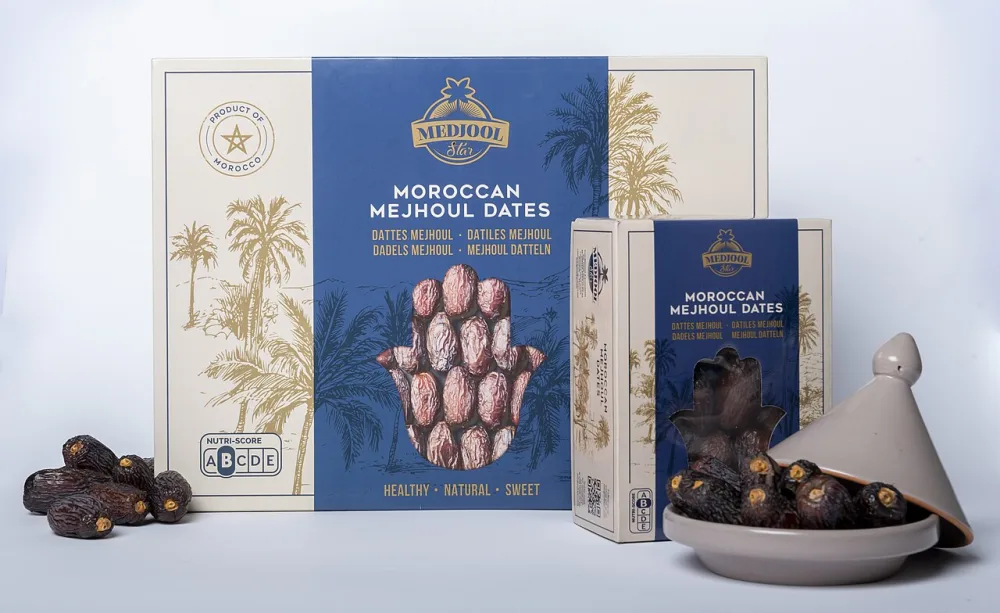
It is important to understand: Medjool grows in many countries — Palestine (notably Jericho/Ariha and the Jordan Valley), Jordan, Saudi Arabia, Tunisia, Morocco, and California. So the label "Medjool" alone does not indicate country of origin. What matters is the country of cultivation and its exporter.
Valid Ways to Confirm Palestinian Origin
1. Look for a "Product of Palestine" or "Grown in Palestine" label
This is the most direct indicator. Honest Palestinian Medjool products state the country of origin explicitly on the packaging. Outlets like CNN Indonesia cite examples of Palestine-labeled brands such as Zaytoun and Yaffa. If buying from a local seller, ask for origin clarity before paying.
2. Check the exporter/producer identity
National media frequently name several large Israeli exporters in boycott calls, such as Hadiklaim (with brands like King Solomon, Jordan River, MyJool), Mehadrin, Carmel Agrexco, and Medjool Plus. Recognizing the producer name on the packaging helps you avoid products that do not match your principles.
3. Choose a transparent direct importer
An importer connected directly to orchards and harvest seasons can more readily account for a product's origin. The 0% import tariff on Palestinian dates since February 2019 (previously 5%), as reported by Antara and Arab News, has also made the direct import route from Palestine to Indonesia common and documented.
Myth vs Fact: Barcode 729
One method most cited by media is that "dates with a barcode starting 729 come from Israel." This needs clarifying so you do not judge wrongly.
| Common Assumption | The More Accurate Fact |
|---|---|
| Barcode 729 = definitely made in Israel | The 729 prefix indicates the brand-owning company registered with GS1 Israel, not automatically where the fruit was grown or packed |
| No 729 = definitely safe | A product could be exported/handled by an affiliated company without the 729 prefix; the barcode is not sole proof |
| The barcode marks country of origin | A GS1 prefix marks company registration, not country of production; the country-of-origin label on packaging is more reliable |
In other words, barcode 729 can be an early signal to be more cautious, but it is not absolute proof. Even outlets like CNN Indonesia note that the Medjool variety needs extra checking because many countries produce it. Stronger evidence is a clear country-of-origin label and producer identity, not the barcode number alone.
Practical Verification Steps Before Buying
- Read the country-of-origin label. Look for explicit "Product of Palestine" / "Grown in Palestine."
- Recognize the producer name. Avoid brands on the boycott lists widely cited by national media.
- Ask the seller specifically. For loose dates without retail packaging, request origin information and, if available, import documents.
- Use the barcode as a signal, not a verdict. The 729 prefix warrants caution, but confirm with the origin label.
- Choose a transparent seller. A direct importer who can explain orchard origin offers greater confidence.
Why Palestinian Medjool Is Special
Beyond the origin issue, Palestinian Medjool is genuinely prized for its quality. The Jericho/Ariha region and the Jordan Valley sit on below-sea-level plains with around 300 days of sunshine, which per sources like Handmade Palestine and Holy Land Dates produce large, soft, and rich dates. Date cultivation was also inscribed by UNESCO as Intangible Cultural Heritage of Humanity in 2019 through a multinational inscription involving Palestine as one of the partner states. So choosing genuine Palestinian Medjool is not only about principle but also premium quality.
Physical Traits That Support Verification
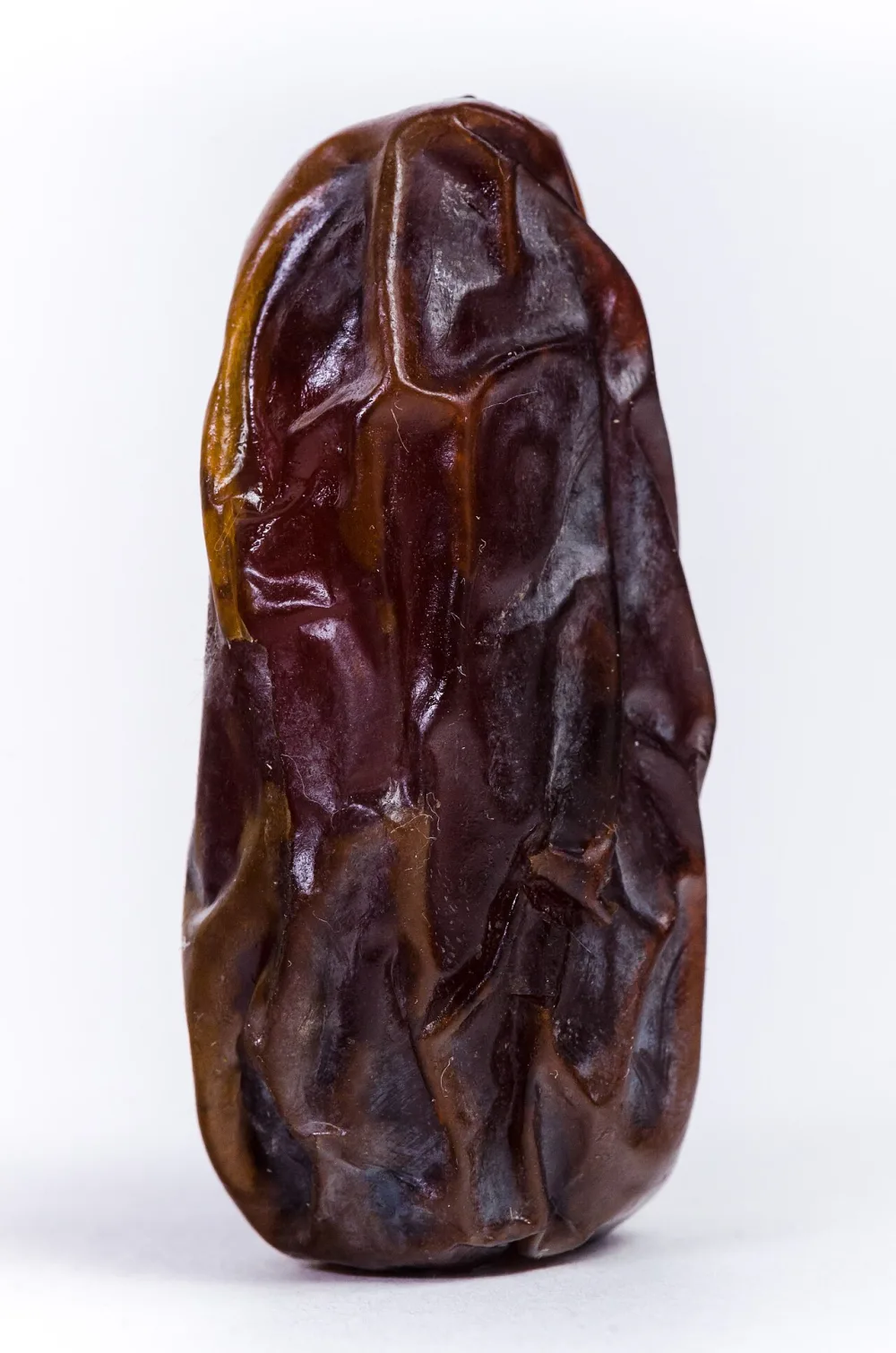
The origin label is the main proof, but recognizing the physical character of quality Medjool helps you assess a product holistically. Palestinian Medjool from the Jericho/Ariha region typically shows the following traits.
| Aspect | Quality Medjool | Warrants Caution |
|---|---|---|
| Size | Large, plump, thick flesh | Small and thin for the claimed grade |
| Color | Even dark brown, glossy skin | Pale, dull, or blotchy |
| Texture | Soft, naturally slightly sticky | Very hard or, conversely, slimy |
| Taste | Rich caramel-like sweetness | Bland or fermented-smelling |
| Packaging | States origin & producer clearly | No origin info, oddly cheap price |
To be clear, physical traits do not replace the origin label — quality dates can come from anywhere, and a label alone without quality is also less than ideal. Use both together: the label to confirm origin, physical traits to confirm quality. Our guide to genuine vs fake Medjool covers these traits in more detail.
Buying Means Supporting Palestinian Farmers
For many consumers, choosing Palestinian Medjool is not just about avoiding certain products but actively supporting farmers in Jericho and the Jordan Valley. Per sources like Holy Land Dates, date farmers in this region are organized into a palm-tree farmers' association with dozens of members across Jericho and the Jordan Valley. Date cultivation itself was inscribed by UNESCO as Intangible Cultural Heritage of Humanity in 2019 through a multinational inscription involving Palestine as a partner state. In other words, buying genuine Palestinian Medjool helps preserve cultural heritage and farming livelihoods — a value beyond a mere shopping transaction.
Avoid Spreading Misinformation
Amid a sensitive issue, misinformation spreads easily. Before forwarding a claim — including about barcodes or brand lists — make sure the source is credible and the context accurate. Accusing a product without adequate evidence can harm a genuinely honest seller. The wisest stance is to verify through the origin label and producer identity, then choose a transparent seller who can stand behind their claims. This approach protects you while keeping fairness for honest sellers.
Buying with Confidence
For consumers wanting to confirm authenticity, our guide on distinguishing genuine vs fake Palestinian Medjool covers physical traits and further checks. Our Medjool range comes from Palestinian sources with origin clarity, and our team is ready to explain the details via WhatsApp before you decide to buy.
This article is educational and informational, not a fatwa or legal advice. For religious guidance, refer to the religious authority you trust.